
Practical Engineering That Solves Complex Structural Challenges
Construction projects rarely go exactly as planned.
An unexpected site condition is discovered. A fabricated steel connection does not match the drawings. A heavy piece of equipment must be installed on an existing floor. A specified structural detail proves difficult or impossible to construct. A material becomes unavailable and must be substituted. The Engineer of Record requests engineering calculations to justify a proposed change before it can be approved.
These situations happen every day on construction projects, and they often place contractors, fabricators, architects, and property owners under significant schedule and budget pressure.
Finding a practical solution is only part of the challenge.
That solution must also be supported by sound structural engineering, clear calculations, and technical documentation that demonstrates the proposed design satisfies the applicable codes and engineering principles.
This is where Sepco Consulting Engineers provides value.
We specialize in structural engineering calculations, structural analysis, practical structural design, and engineering justification for both new and existing structures. Whether you need to verify the capacity of an existing building, develop an alternative structural detail, support a substitution request, evaluate construction loading, or design an entirely new structural system, we provide practical engineering solutions backed by comprehensive analysis and clear technical documentation.
Our focus is not simply producing calculations.
Our objective is to solve structural problems, develop practical solutions that can be built efficiently, and provide the engineering evidence needed to support informed decisions and successful project approvals.
Engineering Support When Standard Solutions Are Not Enough
Many engineering projects begin with complete drawings and clearly defined structural details. Others do not.
During construction, unexpected challenges frequently require engineering input before work can continue.
A contractor may discover that a connection shown on the drawings cannot be fabricated efficiently.
An architect may revise the building layout after construction documents have already been issued.
A property owner may decide to install heavier equipment than originally anticipated.
An existing structure may need to support new loading that was never considered during the original design.
A supplier may recommend an alternative product or structural member that requires engineering verification before approval.
These situations often cannot be resolved by simply applying standard engineering details.
They require an experienced structural engineer who understands both structural behavior and real-world construction.
At Sepco Consulting Engineers, we work closely with contractors, developers, architects, manufacturers, fabricators, industrial facilities, and property owners to develop practical structural solutions that balance safety, constructability, cost efficiency, and code compliance.
Every recommendation is supported by engineering judgement, structural calculations, and technical documentation appropriate for the project.
Common Situations Where Our Services Are Required
Structural engineering calculations are often requested when a project changes after the original design has been completed. In many cases, construction cannot proceed until the proposed solution has been reviewed and supported by a Professional Engineer.
Our services are commonly used in situations such as:
Contractor-Proposed Design Changes
Contractors often identify more practical or economical ways to construct a project than those shown on the contract drawings.
This may involve modifying framing layouts, revising connection details, changing member sizes, simplifying fabrication, or adjusting construction sequencing.
We review the proposed modification, evaluate its structural performance, and prepare the engineering calculations and supporting documentation required for submission to the Engineer of Record or project consultant.
Rather than simply reviewing a proposed idea, we frequently develop an improved solution that better suits the realities of construction while maintaining the structural intent of the original design.
Structural Capacity Verification of Existing Buildings
Many existing buildings are required to support loads that were never anticipated during the original design.
Examples include:
- New industrial equipment
- Manufacturing machinery
- Mechanical units
- Storage systems
- Mezzanines
- Heavy safes
- Process equipment
- Material handling systems
Before these loads are introduced, the existing structure should be evaluated to determine whether sufficient structural capacity is available.
Our analysis identifies structural limitations, available reserve capacity, and any reinforcement that may be required before installation proceeds.
Heavy Equipment Installation and Construction Loading
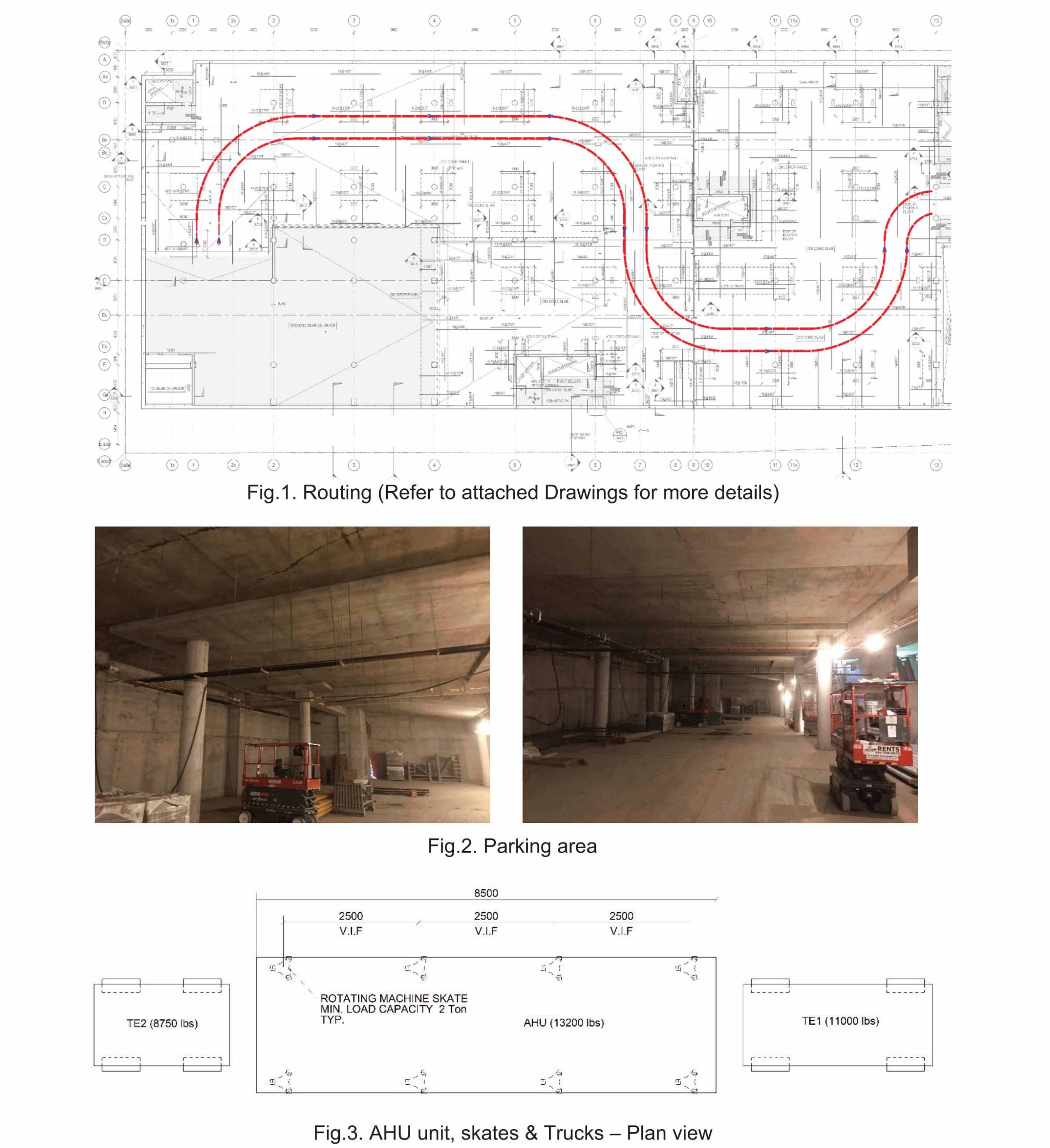
Even if the final equipment location is structurally adequate, moving heavy equipment through an existing building can create temporary loading conditions that exceed the design capacity of floors or suspended slabs.
We assess temporary construction loading, transportation paths, lifting locations, concentrated loads, and critical structural elements to help contractors safely plan equipment installation while minimizing the risk of structural damage.
Alternative Structural Details
Not every detail shown on construction drawings can be fabricated or installed exactly as designed.
Site conditions, fabrication limitations, access restrictions, existing services, or unforeseen field conditions may require an alternative structural solution.
We develop practical replacement details that satisfy the engineering intent of the original design while improving constructability, simplifying fabrication, or reducing construction complexity.
Every proposed detail is supported by engineering calculations appropriate for the application.
Engineering Justification for Structural Substitutions
Material substitutions are common during construction.
A specified steel section may be unavailable.
A proprietary product may be replaced by another manufacturer.
A contractor may propose a different connection or framing arrangement.
Many substitutions require engineering justification before they can be accepted.
We prepare the structural analysis, calculations, and technical documentation needed to demonstrate that the proposed alternative provides equivalent or improved structural performance.
Structural Engineering Services That Move Projects Forward
Every project is different, but the objective is usually the same: develop a structural solution that is safe, practical, economical, and supported by sound engineering.
Whether you require engineering calculations for a single connection or the complete design of a new structural system, we combine practical construction knowledge with advanced structural analysis to deliver solutions that work both on paper and in the field.
Structural Engineering Calculations
Engineering calculations are often required to verify that a proposed structural solution satisfies the applicable building code and engineering standards.
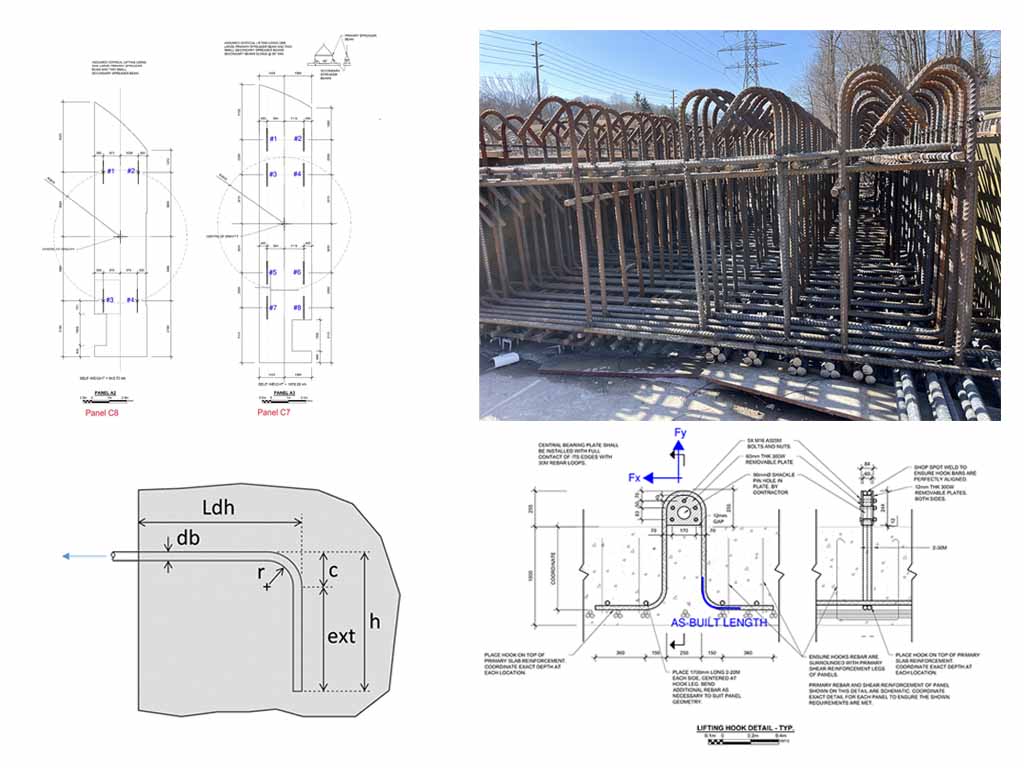
We prepare structural calculations for a wide range of applications, including:
- Steel, concrete, wood, masonry, and aluminum structures
- Beam, column, joist, truss, and connection design
- Existing structure capacity verification
- Floor and roof load assessments
- Structural load path evaluation
- Construction loading
- Concentrated and distributed load analysis
- Equipment support verification
- Mezzanine loading
- Structural reinforcement
- Custom structural components
- Specialty steel structures
Every calculation package is prepared with clarity and practicality in mind, allowing reviewers to quickly understand the engineering approach and supporting rationale.
Structural Analysis of Existing Structures
Many projects involve modifying or loading structures that were designed years or even decades ago.
Understanding how those structures behave under new loading conditions requires far more than checking a few member sizes.
We evaluate the complete structural system to determine how loads travel through the structure, identify potential weak points, verify reserve capacity, and recommend practical solutions when strengthening or reinforcement is required.
Our assessments are frequently used for:
- Equipment installations
- Building additions
- Change of occupancy
- Structural modifications
- Rooftop mechanical units
- Industrial renovations
- Manufacturing facilities
- Existing commercial and institutional buildings
Rather than making assumptions, we develop engineering solutions based on structural behavior and documented calculations.
Practical Structural Design
Good structural design is not simply about making a structure stronger.
It is about creating a solution that can actually be built efficiently.
Our experience working directly with contractors allows us to develop designs that consider fabrication, erection, sequencing, access, material availability, and construction cost from the beginning.
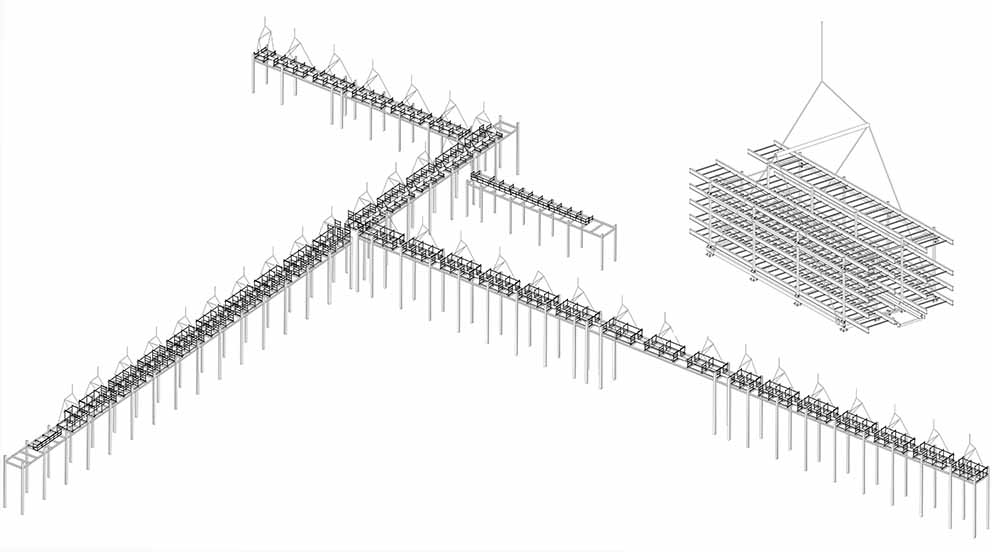
We routinely design structural systems for:
- Industrial facilities
- Commercial buildings
- Structural steel framing
- Equipment support structures
- Pipe and cable support systems
- Mezzanines
- Platforms and catwalks
- Miscellaneous steel structures
- Architectural features
- Structural alterations
- Custom structural assemblies
Whenever practical, we also identify opportunities to simplify fabrication and reduce unnecessary material while maintaining structural performance.
Alternative Structural Solutions
One of the most valuable services we provide is developing alternative structural solutions when the original design cannot be constructed as intended.
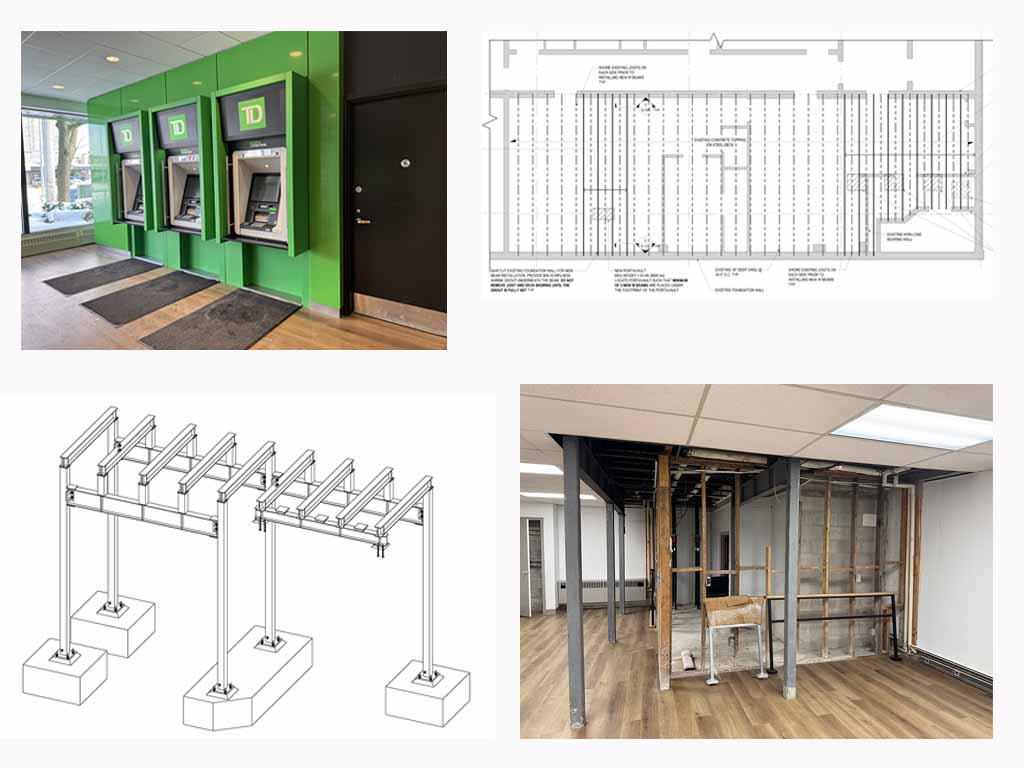
This situation occurs more often than many people realize.
A connection may interfere with existing services.
A specified member may no longer be available.
Site conditions may differ from the original drawings.
Fabrication limitations may require a different approach.
Rather than stopping construction or forcing contractors to redesign the project themselves, we develop practical alternatives that satisfy the engineering requirements while remaining realistic to fabricate and install.
Our recommendations are supported by engineering calculations and detailed technical documentation, providing confidence to project stakeholders reviewing the proposed change.
Finite Element Analysis (FEA)
Some structural problems cannot be adequately evaluated using conventional engineering calculations alone.
Complex geometries, unusual load paths, localized stress concentrations, and specialty structural components often require a more advanced analytical approach.
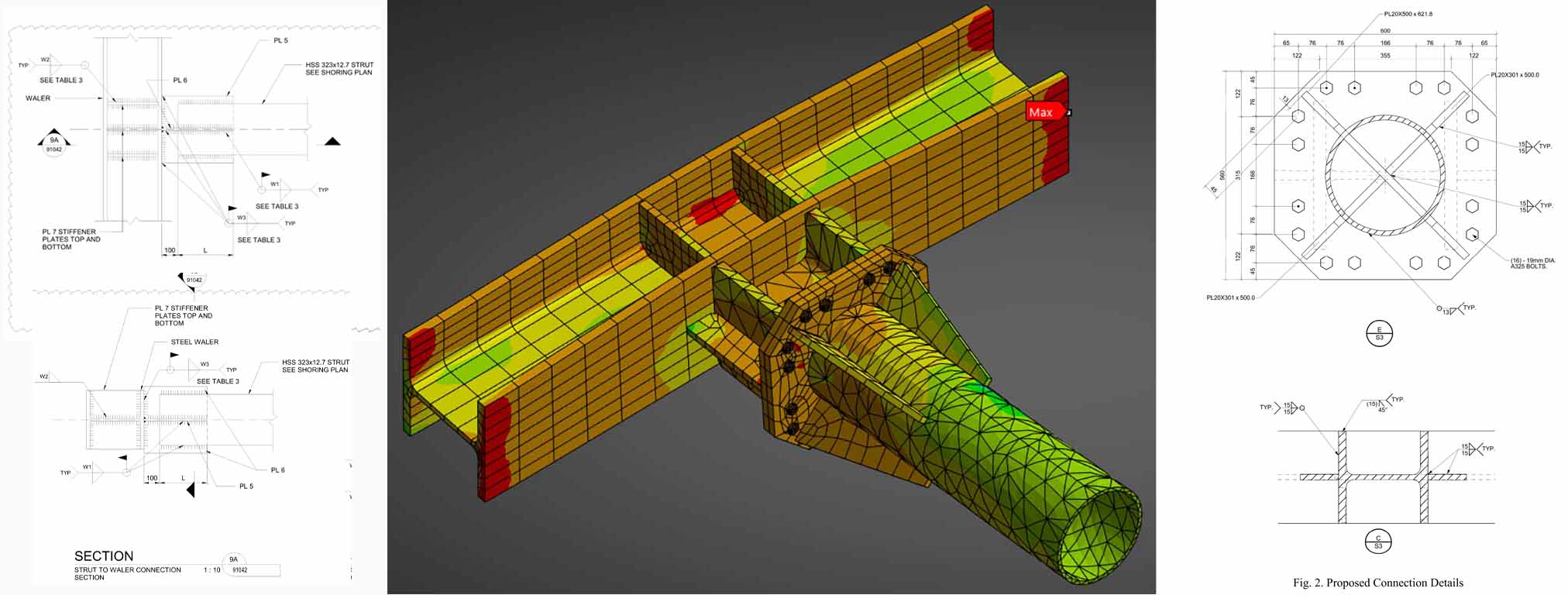
Finite Element Analysis (FEA) allows us to evaluate how forces flow through a structure, visualize stress distribution, identify highly stressed regions, predict structural behavior, and compare multiple design alternatives before construction begins.
For many complex projects, FEA provides an additional level of confidence for owners, contractors, engineers, and reviewers by presenting the structural behavior in a clear and highly visual manner.
Rather than relying solely on equations and numerical results, stress contours and deformation plots often make it much easier for project teams to understand why a proposed solution performs safely.
Although not every project requires Finite Element Analysis, it is an extremely valuable tool when conventional methods alone cannot fully demonstrate structural performance.
Practical Engineering That Balances Safety, Cost, and Constructability
Successful engineering is about much more than satisfying code requirements.
A technically correct design that is difficult to fabricate, expensive to build, or impractical to install may still create unnecessary challenges during construction.
Our engineering philosophy is based on finding the balance between structural performance, constructability, cost efficiency, and long-term reliability.
Every project is approached with the same objective:
Develop the simplest solution that safely satisfies the engineering requirements while reducing unnecessary complexity wherever possible.
By understanding both structural engineering and construction practices, we help clients make informed decisions that improve project efficiency without compromising safety or quality.
Why Clients Choose Sepco Consulting Engineers
Many engineering firms can produce structural calculations.
Far fewer develop practical solutions that satisfy the engineer, the contractor, the fabricator, and the owner.
At Sepco Consulting Engineers, our role extends beyond structural analysis. We help clients solve engineering challenges that arise throughout the design and construction process.
Our recommendations are based on sound engineering principles, practical construction knowledge, and a clear understanding of how projects are actually built.
Whether reviewing a contractor's proposed modification or designing a completely new structural system, our objective remains the same: deliver engineering solutions that are safe, practical, economical, and supported by clear technical justification.
Engineering That Supports Practical Construction
Construction projects move quickly, and unexpected challenges are inevitable.
Fabrication limitations, field conditions, scheduling constraints, and material availability often require engineering decisions that were never anticipated during the original design.
Rather than simply reviewing problems, we work with project teams to develop practical solutions that can be fabricated, installed, and approved with confidence.
Because we understand both structural engineering and construction practices, our solutions are developed with constructability in mind from the very beginning.
Clear Engineering Documentation
A good engineering solution is only valuable if others can understand and approve it.
Our calculations and supporting documentation are prepared in a logical, organized, and technically defensible manner, making it easier for project teams and reviewing engineers to understand the engineering rationale behind each recommendation.
Depending on the project, documentation may include:
- Structural calculations
- Design summaries
- Load assessments
- Capacity verification
- Engineering letters
- Technical reports
- Design sketches
- Sealed drawings
- Finite Element Analysis results
- Structural details
Our goal is to provide documentation that answers questions before they are asked, helping reduce unnecessary review comments and project delays.
Advanced Structural Analysis When Required
Not every engineering problem can be solved using standard design equations.
Projects involving unusual geometry, complex load paths, specialty steel connections, localized stresses, or custom structural components may require more advanced analysis techniques.
Where appropriate, we utilize Finite Element Analysis (FEA) to better understand structural behaviour and support engineering decisions.
This allows us to evaluate structural performance with greater confidence and present complex engineering concepts in a clear, visual format that is easier for clients and reviewers to understand.
Industries We Serve
Our structural engineering calculations and design services support clients across a wide range of industries, including:
- Industrial facilities
- Manufacturing plants
- Warehouses and distribution centers
- Commercial buildings
- Institutional facilities
- Educational buildings
- Residential developments
- Steel fabricators
- General contractors
- Specialty contractors
- Property owners
- Developers
- Architects
- Equipment suppliers
- Project managers
- Municipalities
Whether your project involves a single structural detail or an entire structural system, we provide practical engineering support tailored to your project's unique requirements.
Examples of Projects We Can Assist With
Our experience includes engineering calculations and structural design for projects such as:
- Structural verification of contractor-proposed design changes
- Capacity assessment of existing floors for heavy equipment
- Structural analysis for machinery installations
- Design of equipment support structures
- Alternative steel connection design
- Structural member substitutions
- Load rating of existing buildings
- Mezzanine design and evaluation
- Structural steel framing
- Pipe and cable support systems
- Industrial platforms and catwalks
- Rooftop equipment support
- Structural modifications to existing buildings
- Temporary construction support
- Custom steel structures
- Specialty architectural features
- Finite Element Analysis of complex structural components
From routine engineering calculations to highly specialized structural analysis, every project receives the same attention to detail and commitment to practical engineering solutions.
Frequently Asked Questions
Do you review contractor-proposed structural changes?
Yes. We review proposed modifications, evaluate their structural implications, and prepare the engineering calculations and documentation required to support the proposed solution.
Can you verify whether an existing structure can support additional loads?
Yes. We assess the existing structural system, evaluate its available capacity, and determine whether reinforcement or other modifications are required.
Do you provide engineering calculations for substitutions?
Yes. We prepare engineering calculations to support proposed substitutions where structural verification is required.
Can you analyze existing floors for heavy equipment?
Yes. We perform structural assessments for existing floors, suspended slabs, and other structural systems to evaluate their ability to safely support new equipment or increased loading.
Do you provide Finite Element Analysis?
Yes. When conventional engineering calculations are not sufficient, we use Finite Element Analysis to evaluate complex structural behaviour and support engineering decisions.
Can you design alternative structural details?
Yes. When the original design cannot be constructed as intended, we develop practical alternatives that maintain structural performance while improving constructability.
Who do you typically work with?
Our clients include contractors, steel fabricators, architects, developers, manufacturers, industrial facilities, property owners, municipalities, and consulting engineers.
Discuss Your Structural Engineering Challenge
Whether you require engineering calculations, structural analysis, an alternative structural design, or technical justification for a proposed modification, Sepco Consulting Engineers can help.
From straightforward structural reviews to complex engineering challenges requiring advanced analysis, we provide practical solutions that help projects move forward with confidence.
If your project requires structural engineering expertise backed by clear calculations, practical design, and sound engineering judgement, contact Sepco Consulting Engineers to discuss your project.