
Situation
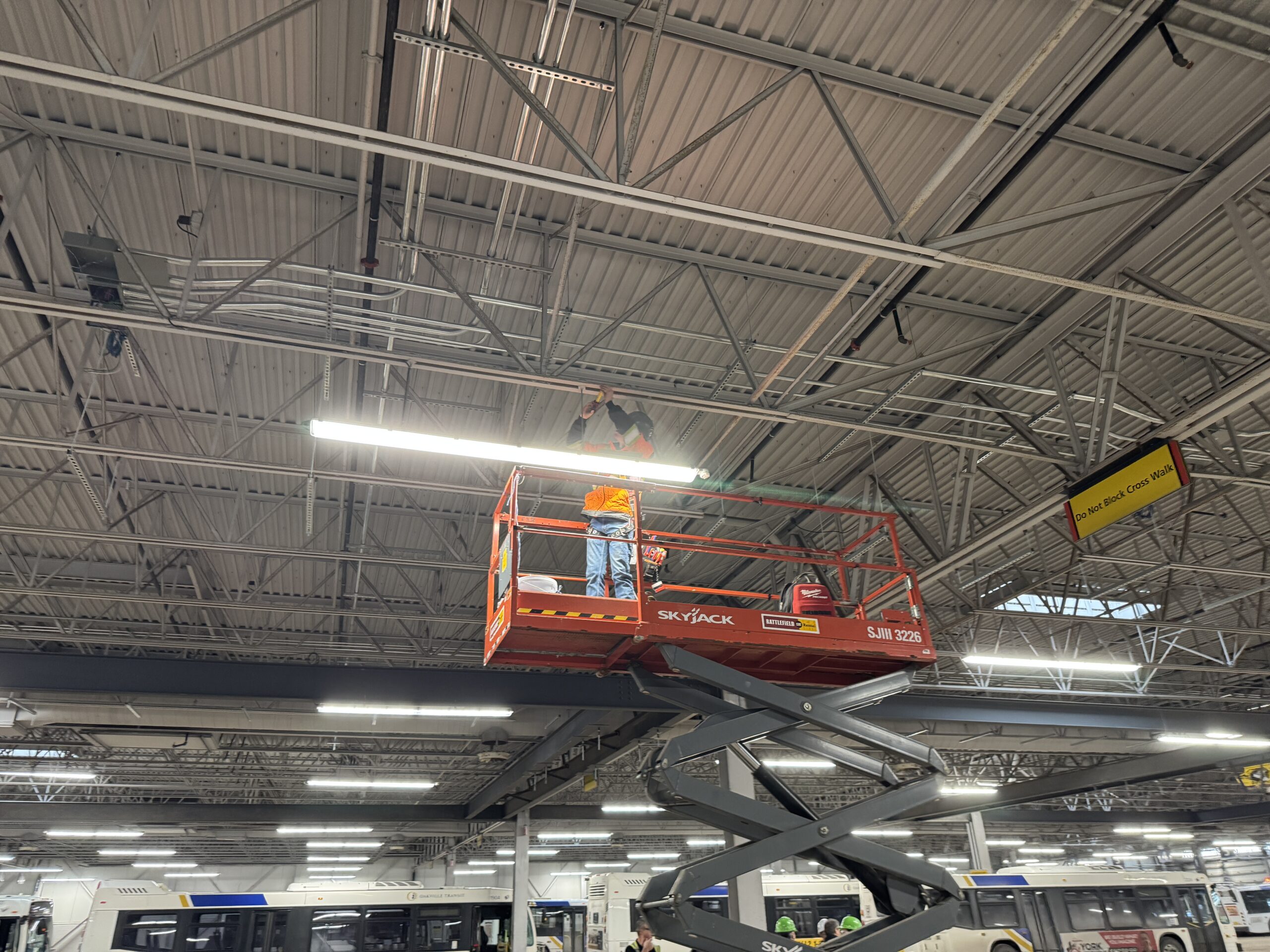
A bus maintenance facility planned the installation of multiple suspended electric charger units and cable reels, each weighing approximately 500 lbs, to be supported from the existing roof structure. The chargers were to be installed at various locations across the facility, requiring attachment to existing open web steel joists (OWSJ) with varying spans and configurations.
The existing structural documentation was limited, and joist shop drawings and original design information were not available. The installation also needed to account for existing and future mechanical and electrical systems supported from the same joists.
Engineering Scope
Following site visits and coordination meetings, services included the design of structural steel supports for the suspended charger units, connection detailing to existing joists, and preparation of sealed shop drawings.
The scope involved assessing the impact of new loads on existing joists based on limited field measurements, developing support details adaptable to varying site conditions, and coordinating with the contractor to address installation constraints. The work also included issuing design notes to address limitations in available information and future loading considerations.
Key Engineering Considerations
Limited availability of original joist design information and shop drawings
Variation in joist spans and configurations across the facility
Attachment of new loads to existing joist bottom chords
Minimizing additional load demand on existing structural members
Coordination with existing and future mechanical and electrical systems
Constructability and installation within an active bus facility
Managing uncertainty due to reliance on field measurements
Outcome
A practical and efficient support system was developed using lightweight steel members spanning between joists, with connection details designed to minimize impact on the existing structure. The design accommodated varying joist configurations and allowed for efficient installation without significant disruption to facility operations.
The approach enabled the project to proceed despite limited structural information, while clearly identifying limitations and ensuring that future loading conditions are reviewed as required. The drawings were delivered within a tight timeline, and the solution provided a balance between structural safety, constructability, and project efficiency.
Projects involving equipment installations within existing facilities highlight the importance of engaging an experienced structural engineer in Toronto to navigate information gaps, coordinate with existing systems, and deliver practical, buildable solutions.
Related Engineering Services
Commercial and industrial structural engineering services
Structural assessment and retrofit design
Electrical and mechanical equipment support design
Discuss a Similar Engineering Challenge
If you’re planning equipment installation within an existing structure or dealing with limited structural information, we can help develop practical and efficient solutions. Contact a structural engineer.