
Load Bearing Wall Removal – Structural Engineering & Permit Drawings (Toronto & GTA)
Sepco Consulting Engineers provides licensed structural engineering services across Toronto and the Greater Toronto Area — including North York, Scarborough, Markham, Richmond Hill, Vaughan, Mississauga, Brampton, Etobicoke, and surrounding regions.
Safe, Code-Compliant Structural Design for Open-Concept Renovations
Creating an open-concept layout almost always requires modifying or removing a load-bearing wall. Load bearing walls are often involved in open-concept renovations, as they support the structure above and must be carefully assessed before any changes are made. Any structural change affects how loads are transferred through the building, and this requires engineering analysis, a properly designed beam or lintel, and P.Eng. stamped drawings for permit.
Sepco Consulting Engineers provides licensed structural engineering for homeowners, contractors, architects, and renovation teams across Toronto and the GTA. Our work ensures your wall-removal project is designed safely, meets Ontario Building Code requirements, and is approved for permit and construction. The first step in any load bearing wall removal project is a structural assessment, which helps determine the scope and cost of the work. If you are evaluating a property before purchase, see our Pre-Purchase Structural Assessment service.
When Do You Need a Structural Engineer for Wall Removal?
You should involve a structural engineer whenever:
- A wall may be load-bearing
- You are creating an open-concept layout
- A larger opening is required
- Joists, beams, or roof framing connect to the wall
- A new beam or post is required
- The city requires stamped drawings (almost always)
- The building department requires necessary permits and permission before any structural changes
Only a licensed engineer can evaluate load paths and design a safe replacement structure. Learn more about how structural loads transfer through a building in our detailed guide to Load Path Analysis.
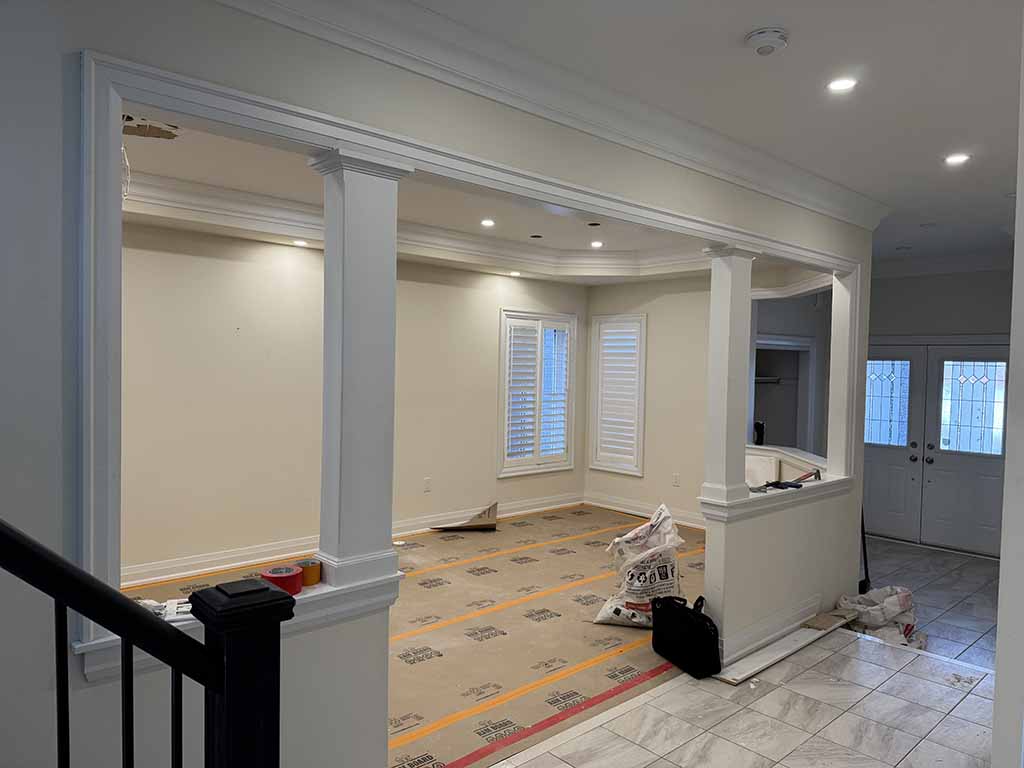
Existing condition before removal of a load-bearing wall as part of an open-concept renovation project.
Our Engineering Process
1. Site Review or Existing Drawing Review
We assess:
- What the wall supports
- Floor and roof framing layout
- Existing beams and bearing points
- Foundation conditions for new posts
- Conflicts with HVAC, plumbing, or electrical systems
- Access for bringing in materials and equipment, as well as for future maintenance or electrical work
- The condition of floor joists, especially those located downstairs, to ensure structural stability during wall removal
This can be completed through an on-site visit or a review of detailed plans.
2. Structural Analysis & Beam Sizing
We design:
- Steel or engineered wood beams (LVL/PSL)
- New structural posts
- Bearing requirements
- Footings or foundation reinforcement (if needed)
- Deflection and vibration checks
- The header for the new opening, ensuring it is properly sized and supported
- The support beam or new support beam to be installed for structural integrity
- Whether additional reinforcement is needed to maintain safety and compliance
- How loads are carried and supported by the new structural elements
- The installation or installing of jack studs, king studs, and other studs as part of the framing
- How the original wall is replaced with properly designed structural supports
Designs follow Ontario Building Code, CSA standards, and engineering best practice.
3. Stamped Structural Drawings (PEO Licensed)
You receive a full engineering package for permits and construction:
- Framing plans
- Beam and post sizes
- Connection details (including custom wood connection brackets where standard hardware is not suitable)
- Footing/pad reinforcement (if required)
- General notes and specifications
- PEO engineering stamp
- Details for all structural elements, including beams, columns, and support structures, as well as the new opening created by wall removal
Municipalities across the GTA accept our drawings for permit approval.
4. Support During Construction
We remain available for:
- Clarifications during framing
- Adjustments if unforeseen site conditions appear
- Optional site reviews
- Communication with building inspectors
Our goal is to keep the project safe, compliant, and efficient, while our ongoing support helps minimize stress for homeowners and contractors during construction.
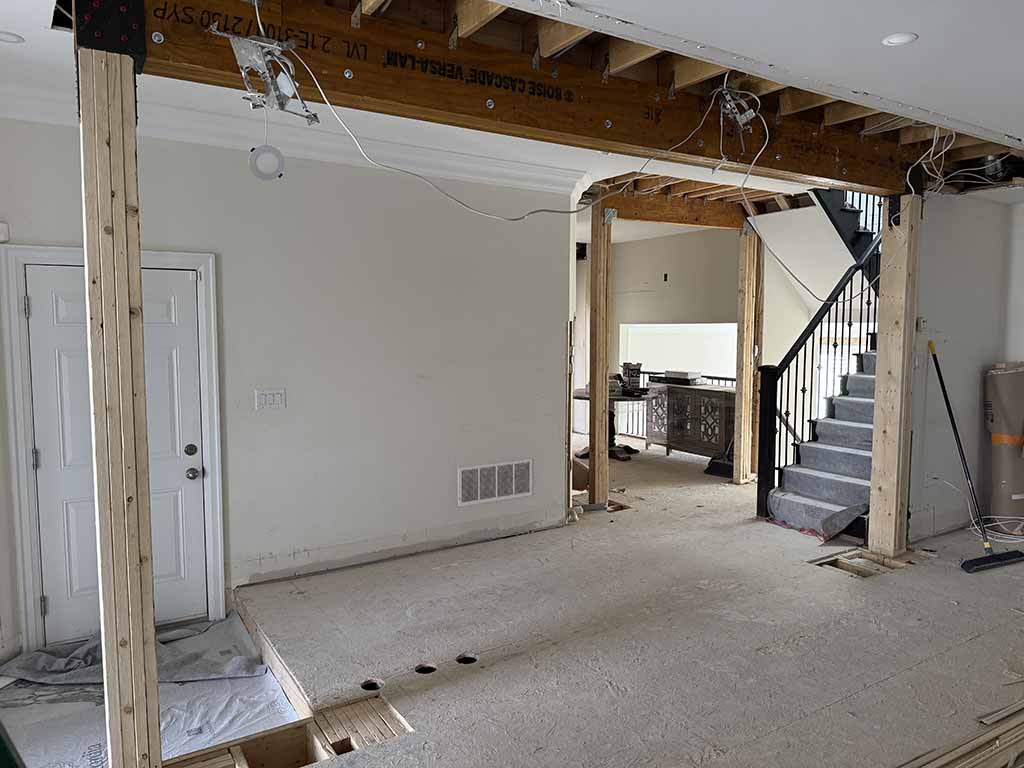
Structural modifications in progress following the removal of a load-bearing wall and installation of an engineered beam system.
Temporary Supports and Safety During Wall Removal
Removing a load bearing wall is a complex process that demands careful planning to maintain the structural integrity of your house. Before any part of a bearing wall is taken down, temporary supports must be installed to safely carry the load that the wall was supporting. These supports—often in the form of adjustable steel columns or sturdy wood posts—are strategically placed to transfer the weight from the floors, ceiling, and roof above to the foundation below.
The process begins with a thorough assessment of the wall and the loads it carries. Once the load paths are understood, temporary braces are set up on both sides of the wall to ensure that the structure remains stable throughout the removal. This step is crucial to prevent any sagging, shifting, or structural damage to the rest of the house during wall removal.
Safety is always the top priority. Proper installation of temporary supports protects not only the structure but also everyone working on the project. Removing a load bearing wall without adequate support can lead to serious structural issues, including cracks in walls and ceilings, uneven floors, or even partial collapse.
By following a well-planned approach and using the right materials and techniques, the risk of compromising the structural integrity of your home is minimized. Always ensure that temporary supports are installed and removed under the supervision of a qualified professional to guarantee a safe and successful wall removal project.
Typical Wall-Removal Projects We Design
We commonly design:
- Open-concept kitchen/living spaces
- Large openings between living/dining rooms
- Multi-beam layouts for major renovations
- Partial wall removals and archway enlargements
- Large window and door openings in exterior walls to create more light and improve access
- Support for stair openings or second-floor alterations
- Kitchen renovation projects that create new space or openings for improved layout and functionality
Each design is fully customized to your home and renovation goals, and is created to maximize space and functionality.
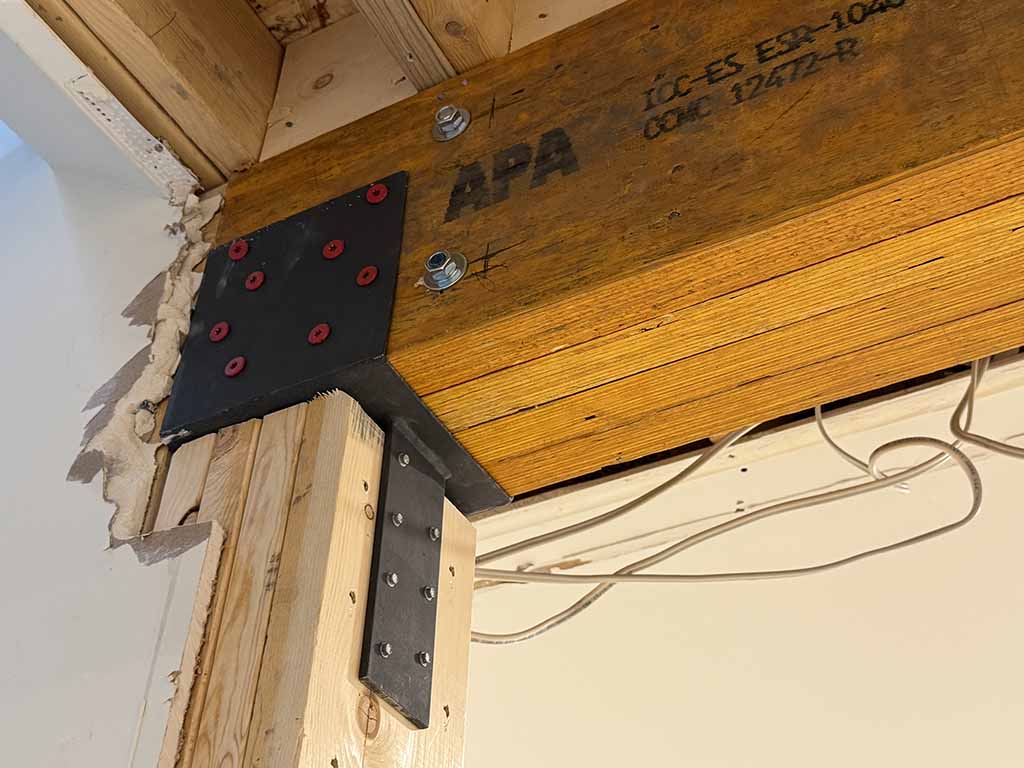
Custom steel connection detail used to transfer loads from a new LVL beam to engineered support posts during a residential renovation.
Why Choose Sepco Consulting Engineers?
- Licensed Professional Engineers (PEO)
- Designated Consulting Engineer – high-level credential in Ontario
- Clear, practical, construction-focused designs
- Fast turnaround and responsive support
- Experience with residential, commercial, and industrial structures
- Designs tailored to real-world contractor needs
- Modern design solutions that enhance aesthetics and functionality
We help ensure your renovation is safe, compliant, and efficiently executed, with every project finished to a high standard, including paint and final touches.
Service Area
We provide wall-removal engineering across:
- Toronto
- GTA (North York, Scarborough, Etobicoke)
- York Region (Markham, Vaughan, Richmond Hill)
- Peel Region
- Durham Region
- And surrounding areas
Remote and digital review options are also available.
Frequently Asked Questions (FAQ)
1. Is this wall load-bearing?
A structural engineer determines this by reviewing floor and roof framing, joist direction, support beams, and how the building transfers loads. As part of the assessment, identifying studs—especially jack studs and king studs—is crucial, since these components often indicate structural support in load-bearing walls. Visual clues alone are not reliable.
2. Do I need a permit to remove a load-bearing wall?
Yes. Any structural modification requires a building permit, which must include P.Eng.-stamped structural drawings. The building department requires that you obtain the necessary permits and permission before any structural modifications can begin.
3. Can you design both steel and wood beams?
Yes. We design LVL, PSL, and steel beams depending on spans, loads, and construction preferences. The design includes specifying the header, support beam, and any additional reinforcement needed to ensure that loads are properly carried and supported. The original wall is replaced with a new support beam, and the choice of material—such as steel, timber, or engineered wood—is based on structural requirements. Installing these elements is an essential part of the construction process.
4. Do you provide on-site inspections during construction?
Yes. We can visit the site to confirm existing conditions, review temporary shoring, and support your contractor as needed. During our inspection, we also assess access for materials and equipment to ensure efficient transportation and future maintenance. Additionally, we check for any issues that may affect areas downstairs, such as dust or debris, to help keep those spaces clean and protected during construction.
5. How long does the engineering process take?
Typical turnaround for drawings is 3–7 business days depending on project complexity and site conditions.
6. What if standard brackets don’t fit my beam or post?
In many renovations, standard hardware does not match the actual framing condition. In these cases, we can provide custom wood connection brackets designed and made specifically for your project, often within a few days.
Ready to Get Started?
We’re here to help you complete your renovation safely and efficiently.