
Steel Fabricator: Connection Design – The Art and Science Every Contractor and Engineer Needs to Know
Sepco Consulting Engineers provides licensed structural engineering services across Toronto and the Greater Toronto Area — including North York, Scarborough, Markham, Richmond Hill, Vaughan, Mississauga, Brampton, Etobicoke, and surrounding regions.
Steel connections are the unsung heroes of every structure. They may look small compared to beams and columns, but they determine whether a building is safe, efficient, and cost-effective.
Specialized companies, including steel fabricators, play a crucial role in designing and executing steel connections for a wide range of projects.
Whether constructing a high-rise, an industrial plant, or a warehouse, the joints that tie steel members together are critical. Poorly designed connections can cause costly delays, unsafe conditions, or failures. Smart, carefully engineered connections can save money, reduce labor, and improve long-term durability. When existing buildings are renovated or structural loads change, existing connections should also be evaluated to verify their adequacy. Learn more about our Structural Connection Assessment and Reinforcement Design service for existing steel structures.
Connection design is a specialized niche requiring creativity, foresight, and practical judgment. In many ways, it’s an artform in engineering, blending science, experience, and innovation.
This article is your comprehensive guide to steel connection design, covering forces, types, fabrication, logistics, costs, and advanced tools like AI. You’ll also learn why hiring the right engineer is a strategic investment.
 Why Steel Connections Matter
Steel connections aren’t just pieces of steel—they are load transfer points. In any high-rise, industrial plant, or warehouse, these connections are fundamental to the integrity of steel buildings, where steel framing provides strength, flexibility, safety, and sustainability.
A well-designed connection ensures the structure:
 Transfers loads safely and efficiently
 Maintains stability under normal and extreme conditions
 Can be fabricated, shipped, and erected practically
 Reduces unnecessary costs and labor
 Understanding Forces and Load Paths
Every connection is a force transfer system. If forces aren’t properly accounted for, even the strongest beam or column can fail at its connection.
Connections must consider:
 Dead loads – weight of structural elements
 Live loads – occupancy, equipment, furniture
 Wind – lateral shear, uplift, overturning
 Seismic loads – dynamic horizontal + vertical forces
 Thermal effects – expansion and contraction
- Dynamic/vibration loads – machinery, vehicles, pedestrian traffic
In structural steel design, the spacing of columns and beams is typically measured from center to center. This center-to-center measurement is essential for ensuring proper load distribution and maintaining structural alignment throughout the building.
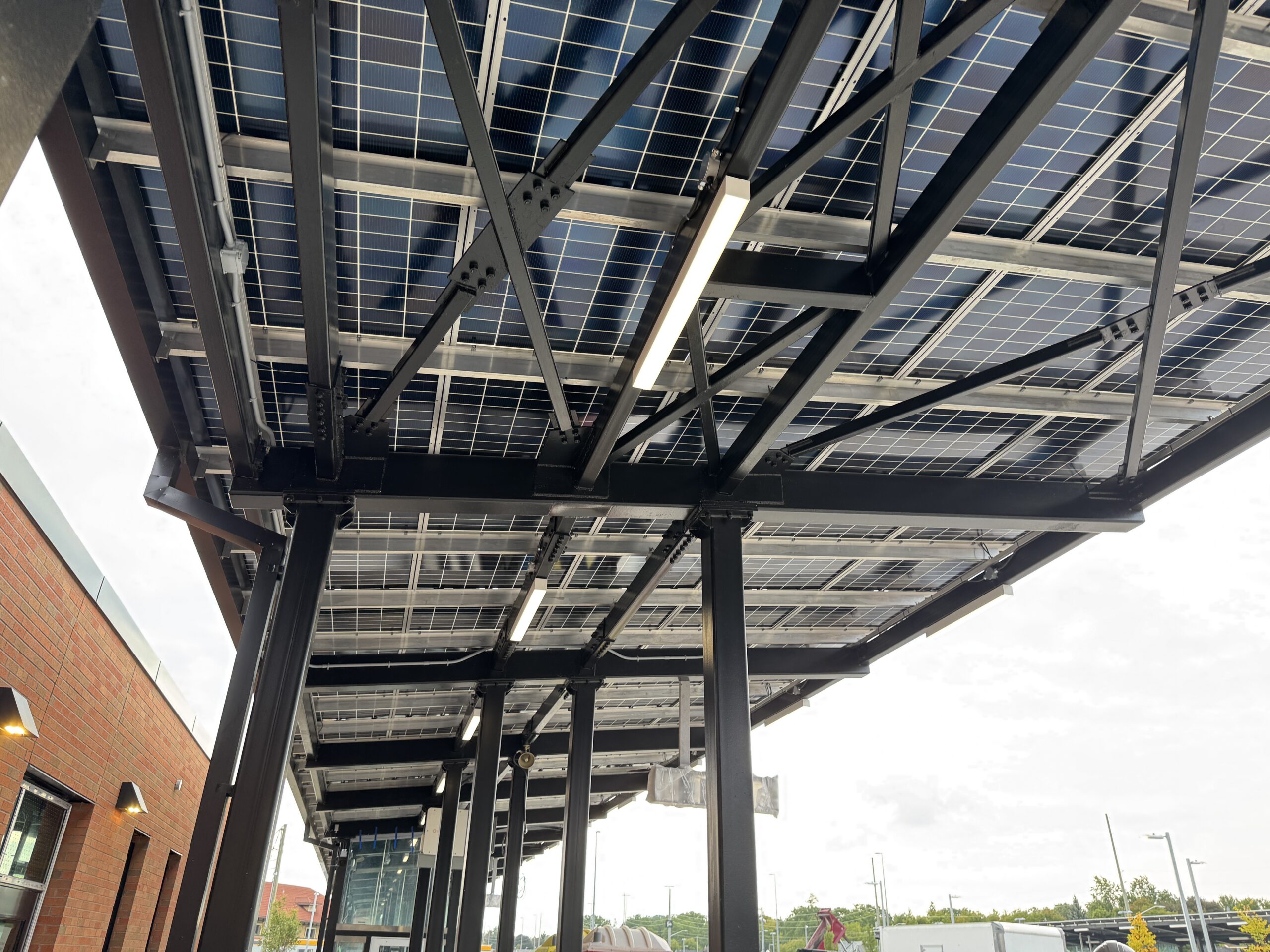
 Types of Steel Connections
The form and configuration of each connection type are carefully considered to ensure structural integrity and ease of assembly.
 Bolted Connections: Easy to assemble, replace, inspect; consider bolt grade, shear, bearing, and pre-tensioning. Steel fabricators must fabricate these connections to precise specifications, taking into account the configuration and form required for optimal performance.
 Welded Connections: Fillet, groove, full penetration welds; strong rigid joints requiring skilled labor. The configuration and form of welded connections are critical, and fabricators must ensure each weld is fabricated to meet design requirements.
- ↔ Moment Connections: Resist bending; crucial in lateral-load frames. The configuration and form of these connections are designed to provide maximum resistance to bending forces.
 Hybrid Connections: Bolts + welds for optimized efficiency. The configuration combines the strengths of both connection types, and fabricators must fabricate each component to fit the intended form.
 Seated & Cleat Connections: Support lighter/temporary loads, allow rotation if needed. The form and configuration of these connections are tailored for flexibility and ease of assembly.
Steel Frame Construction
Steel frame construction is a cornerstone of modern building, utilizing steel beams and columns as the primary structural steel members to create a robust skeleton for both commercial and residential buildings. This technique involves assembling a framework of steel members on the construction site, which is then filled in with materials like concrete, wood, or glass to complete the structure. The result is a highly adaptable and resilient system that supports a wide range of architectural designs and building requirements.
The process begins with the careful design and fabrication of steel components, tailored to the specific needs of each project. Once fabricated, these steel members are delivered to the construction site, where they are assembled into a steel frame using a combination of bolted and welded connections. The choice of connection technique—whether bolts or welding—depends on factors such as load requirements, site conditions, and the desired speed of assembly. This flexibility in steel framing allows architects and engineers to create innovative forms and complex shapes that would be difficult or impossible with traditional materials.
One of the standout advantages of steel frame construction is its exceptional strength-to-weight ratio. Steel beams and columns can support significant loads while remaining relatively light, which not only simplifies transportation and erection but also allows for larger open spaces within buildings. This makes steel framing especially popular in commercial projects like office towers, warehouses, and industrial facilities, as well as in residential applications where open-plan layouts are desired.
Steel frame construction is also renowned for its durability and resistance to natural disasters. The inherent flexibility of steel members enables the structure to absorb and dissipate forces from events such as earthquakes and hurricanes, enhancing the safety and longevity of the building. Additionally, steel framing is impervious to pests, rot, and fire, providing a level of resilience that traditional wood framing cannot match.
However, there are some challenges to consider. The higher initial cost of steel framing compared to wood can impact the overall cost of a project, especially for smaller residential buildings. Steel is also a highly conductive material, which can lead to thermal bridging—where heat transfers through the steel members, potentially reducing the building’s energy efficiency if not properly addressed. Specialized skills and equipment are required for both fabrication and assembly, which can add to labor costs and project complexity.
Despite these considerations, the long-term benefits of steel frame construction often outweigh the drawbacks. Steel is a sustainable material, with a high recycling rate and the ability to be reused in new projects. Advanced techniques, such as the SIN beam concept, further enhance the efficiency and cost-effectiveness of steel framing by optimizing material use and reducing waste. These innovations, combined with the durability and adaptability of steel structures, make steel frame construction a smart investment for a wide range of building projects.
In summary, steel frame construction offers unmatched strength, flexibility, and sustainability for modern buildings. Whether for a commercial high-rise or a residential home, steel framing provides a reliable foundation that meets the demands of today’s construction environment—delivering safe, efficient, and future-ready structures.
 The Art and Science of Connection Design
Designing connections isn’t just calculation—it’s about creating innovative connection solutions to address unique project challenges through creative problem-solving.
Real-world examples illustrate the importance of creative problem-solving in connection design.
Example: Site conditions differ from the original drawings. Existing structural connections are assessed, their capacity verified, and practical reinforcement details are developed to avoid costly rework and construction delays.
 Pro insight: Paying a premium for a connection specialist saves tens of thousands in labor/materials over the long term.
 Material Selection and Welding Considerations
- Steel grades: Strength, ductility, corrosion resistance; steel plate is commonly used for fabricating connection elements
- Welds: Fillet, groove, plug, full-penetration welds
- Bolts: High-strength pre-tensioned; torque control essential
 Corrosion protection: Galvanizing, epoxy-coated bolts, protective coatings; steel members are often painted to protect against moisture and corrosion
Fabrication, Logistics, and Shipment
Connections must also be buildable:
 Fabrication tolerances → holes, fit-up gaps
- Erection → lifting points, temporary supports
 Shipping → oversized assemblies, modular breakdown, protective coating
During fabrication, steel plates are often positioned on a stationary table to ensure precise cutting and machining operations.
 Inspection and Quality Assurance
QA/QC is critical:
 On-site checks → bolts torqued, welds per spec
 NDT → ultrasonic, radiographic testing
 Documentation → compliance and insurance reports, all completed in accordance with relevant industry standards and codes
Cost Considerations
Smart connection design affects project cost and savings:
- Reduces labor-intensive modifications
- Minimizes material waste
- Prevents schedule delays
Over half of new commercial buildings utilize steel framing, underscoring its cost-effectiveness and widespread popularity.
Advanced Topics
- Fatigue design – bridges, cranes, industrial facilities
- Fire resistance – heat reduces steel strength; accommodate thermal expansion
- Seismic detailing – ductility + redundancy in seismic frames; steel can bend without cracking, making it ideal for demanding, earthquake-prone applications
Industry Applications
 Commercial towers – rigid moment frames, where structural steel components such as beams and columns are often formed from steel plate and rolled shapes to meet specific project requirements.
- Industrial plants – crane rails, machinery support
 Bridges – fatigue-critical welds
 Residential – light-gauge framing connections
 Tools of the Trade
- IDEA StatiCa, SDS2, Tekla, Etabs – modeling, design; detailers rely on specialized software and reference tables to ensure accurate connection design.
- BIM integration – clash detection, fabrication sequencing; many of these tools are now web-based, providing easy access to up-to-date resources and design standards.
- Finite Element Analysis (FEA) – optimize bolts/welds, visualize stress
 Hiring a Connection Specialist
Benefits of an experienced engineer:
- Accurate, practical solutions
- Supports remedial work on as-built deviations
- Reduces costs and labor
- Ensures long-term durability
A connection specialist focuses exclusively on the complexities of steel connection design, providing tailored solutions for each project.
 The Role of AI
AI helps:
- Automate repetitive tasks
- Suggest optimized layouts
- Predict performance under loads
- Integrate with BIM
AI tools can rapidly access references such as design codes and standards, ensuring accurate and up-to-date connection design.
AI augments but doesn’t replace expert engineers.
 Popular Questions About Steel Connection Design
 What’s the difference between bolted and welded connections?
Bolted connections use high-strength bolts to join steel members. They are easy to assemble, inspect, and replace, making them flexible for field adjustments. Welded connections fuse steel pieces together permanently, providing rigid joints with excellent load transfer. Choosing between them depends on structural requirements, site conditions, and cost considerations.
What are moment connections and why are they important?
Moment connections are designed to resist bending moments in addition to shear forces. They keep the connected members rigidly fixed, maintaining stability under lateral loads like wind or seismic forces. These connections are critical in buildings that rely on rigid frames for strength and overall structural integrity.
How much does steel connection design cost?
The cost of steel connection design varies depending on project complexity, type of connection, and engineer expertise. Hiring a specialized connection engineer may seem premium initially but can save thousands in labor, material waste, and remedial work. Small, standard connections might cost a few hundred dollars to design, while complex, critical connections can cost several thousand.
Can AI design steel connections?
Artificial Intelligence can assist in steel connection design by automating calculations, optimizing layouts, and predicting performance under various loads. However, AI cannot fully replace a skilled engineer. Human expertise is crucial for creative problem-solving, addressing site-specific conditions, and making practical, cost-effective design decisions.
Call to Action
Steel connection design is a science and an art requiring:
- Deep understanding of forces
- Creative, cost-efficient problem-solving
- Attention to fabrication, erection, logistics
- Welding, bolting, corrosion protection expertise
We provide specialized steel connection design, remedial solutions, and practical support.
Contact us today to ensure your project is safe, efficient, and cost-effective.