
Situation
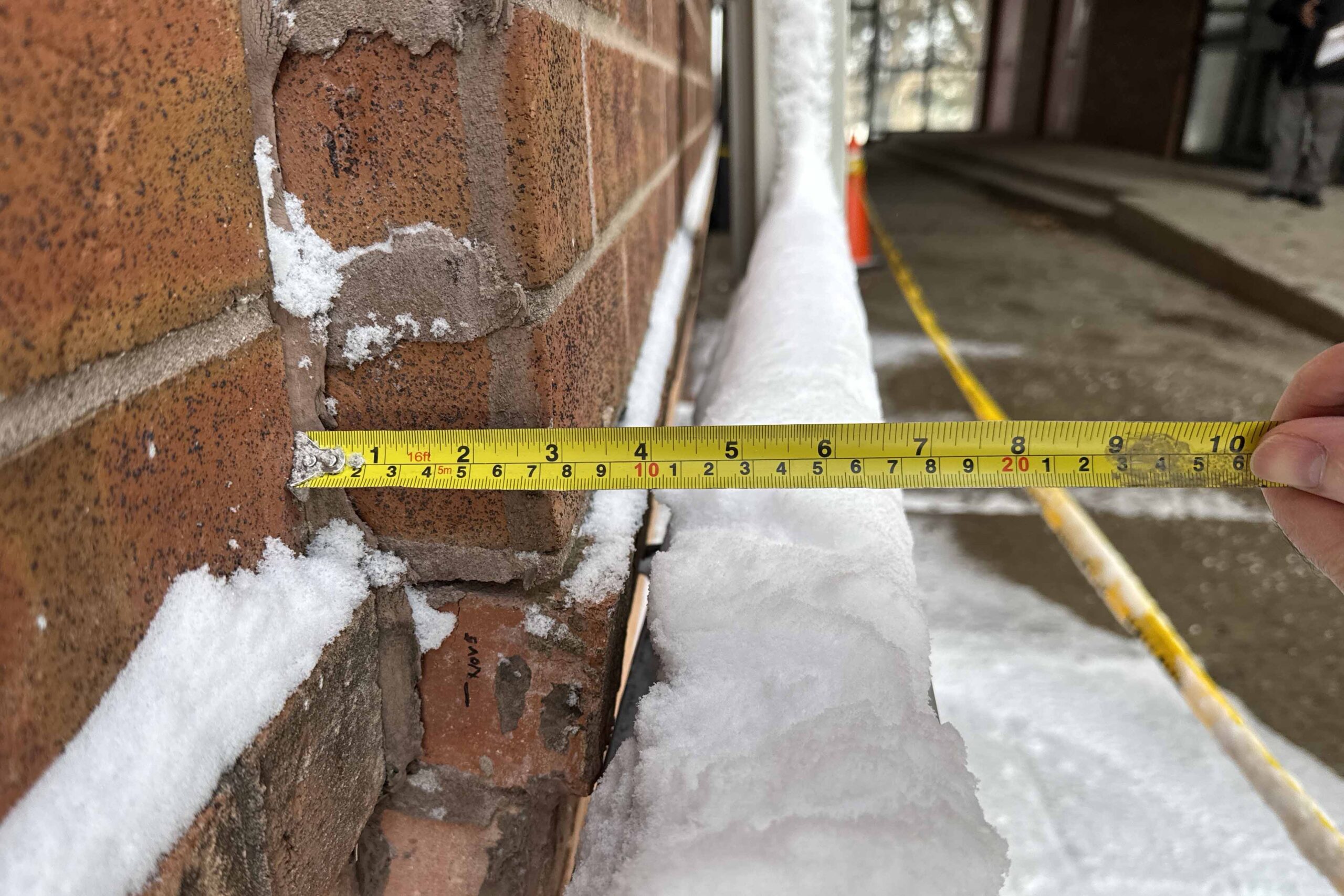
During a site visit to a mid-rise residential building in the Greater Toronto Area, concerns were raised regarding visible outward displacement of the brick veneer along one exterior elevation. The building, approximately 30 years old and five to six storeys in height, exhibited localized bulging of the masonry façade, with displacement measured at approximately 75 mm (3 inches), indicating loss of structural anchorage and potential risk of localized veneer failure.
The objective was to assess the cause and extent of the veneer displacement, evaluate potential structural and safety implications, and provide clear technical guidance regarding required remedial measures and prevention of further deterioration.
Engineering Scope
Engaged to perform a structural and forensic assessment of localized brick veneer displacement affecting the exterior wall assembly of the building.
The scope included site inspection, documentation of observed conditions, evaluation of veneer anchorage systems and wall assembly, identification of potential moisture intrusion sources, and development of repair and mitigation recommendations.
Key Engineering Considerations
Condition and performance of metal ties anchoring the brick veneer to the backup wall
Extent of deterioration due to prolonged moisture exposure
Stability implications associated with observed veneer displacement
Identification of potential water ingress pathways at roofline and façade interfaces
Contribution of interior moisture sources, including adjacent bathroom areas
Risk of progressive veneer instability or localized failure
Constructability and sequencing of remedial repairs
Outcome
The investigation determined that the observed bulging of the brick veneer was caused by deterioration and loss of effective anchorage between the veneer and the backup wall, resulting from long-term moisture exposure and corrosion of veneer ties. Contributing factors included deficiencies in roof drainage near the eavestrough and sustained moisture exposure within the wall assembly.
A detailed engineering assessment was completed outlining observed conditions, probable root causes, and associated risks. Recommendations were provided for removal and reconstruction of the affected veneer sections, along with corrective measures to address moisture intrusion and installation of new corrosion-resistant ties. The findings enabled the client to understand the structural implications and define an appropriate repair strategy.
Forensic assessments related to masonry veneer distress and moisture-related failures benefit from review by an experienced structural engineer in Toronto to evaluate structural implications, define remedial scope, and support informed decision-making.
Related Engineering Services
Forensic Structural Engineering
Masonry Veneer Assessment and Failure Investigation
Building Envelope and Moisture-Related Structural Evaluation
Structural Condition Assessments
Discuss a Similar Engineering Challenge
If you’re planning a project with similar structural constraints or technical challenges, we can provide practical engineering guidance and documentation. Contact a structural engineer.